Quechua NH500 Escape Rolltop 23L Backpack Review
The Quechua NH500 Escape Rolltop 23L is a budget-friendly rolltop backpack with expandable capacity, durable materials, and plenty of pockets for everyday use.
Our Verdict
Save time. Get access to brief summaries of our reviews so you can browse and make decisions more efficiently.
Pros
- The bag is budget-friendly
- It expands thanks to the rolltop design
- There's enough padding on the back panel and shoulder straps to stay comfortable all day
Cons
- The bag looks and feels a bit cheap
- The laptop compartment can be awkward to access
- It isn't the most stylish bag
Technical Details
-
Capacity
23l
Expands to 27 liters
-
Weight (lb)
1.9 lb (0.9 kg)
-
Dimensions
18.11 in x 11.02 in x 8.66 in (46 x 28 x 22 cm)
-
Notable Materials
Polyester, Polypropylene, Polyurethane (PU), SBS Zippers
-
Manufacturing Country
Vietnam
-
Tablet Sleeve Size
13"
-
Laptop Compartment Size
15"
-
Warranty Information
Full Review
We get a lot of comments on YouTube and Instagram telling us to try more Decathlon gear. The Quechua NH500 Escape Rolltop 23L Backpack is a rolltop version of their popular travel bag, which we liked, so we thought it was worth seeing how this version performs for travel, commuting through the city, and everyday use. Will it hold up, or will we end up wishing we’d saved up for something better? Let’s dive in and find out.
External Components
The pack is crafted from polyester. It feels cheap, but this bag is cheap, after all, so we can’t scoff at that too much. At the time of writing, it’s available for $60, which isn’t the least expensive pack we’ve tested, but it’s certainly budget-friendly. Despite that, it doesn’t feel like it’ll rip, tear, or develop a hole; it just doesn’t feel expensive. We wouldn’t load it up with your most costly tech gear and take it on the trail for a week, but you do you.
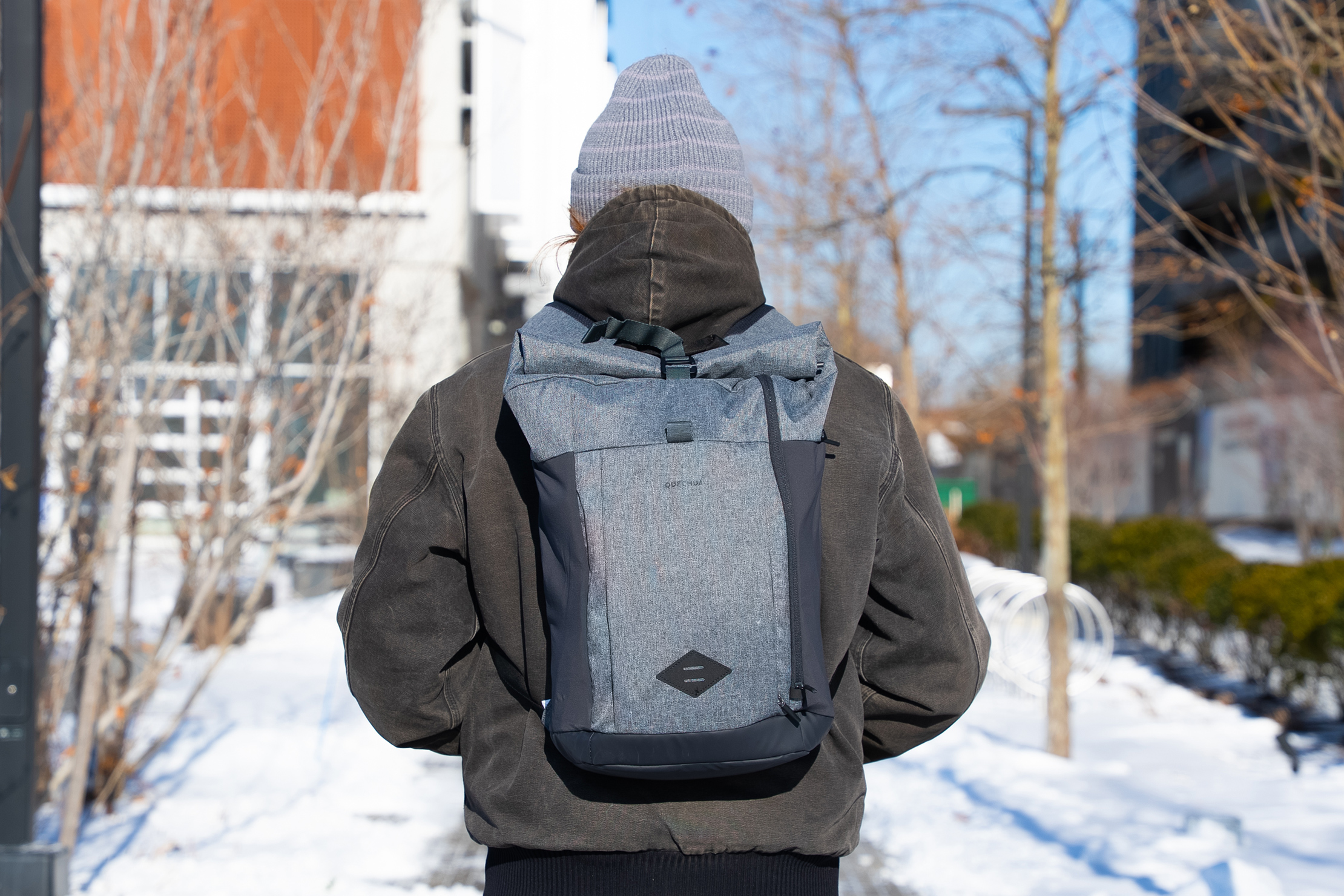
The bottom of the pack is more durable and water-resistant. We dig this feature, as it enables you to set it down on a wet surface without the materials soaking up water. Plus, this part of the bag needs to be more durable, as it is in contact with the elements more. It adds to the bag’s design, too.
The pack utilizes SBS zippers. These aren’t our favorite (YKK are), but many top brands use them, and we haven’t had any notable issues with the brand in general or with this pack. The tracks are smooth, and they’ve proven durable in the field. More expensive brands than Decathlon use them, so we don’t see an issue with their use here.
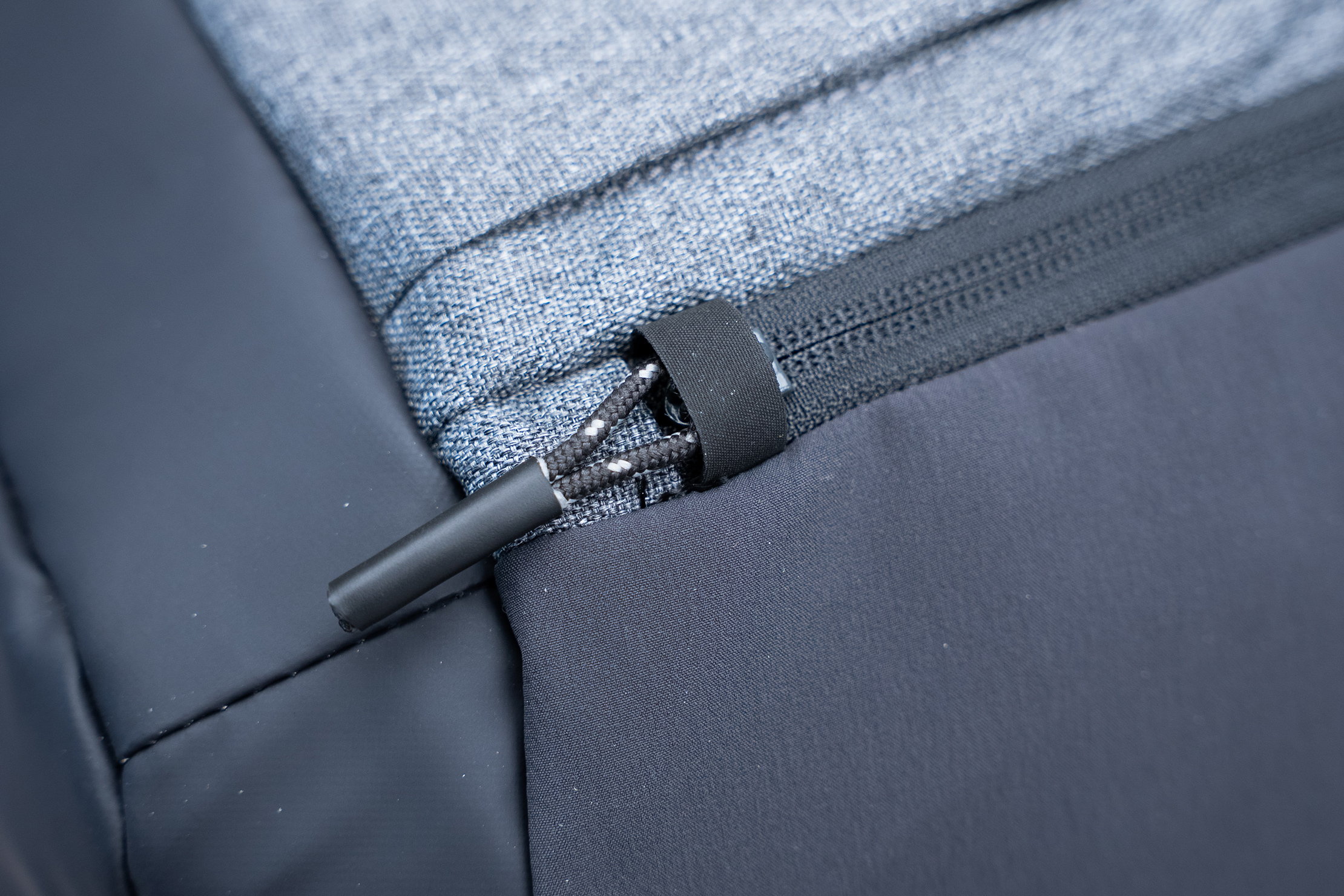
The hardware is from Duralon, a brand we’ve only seen on Decathlon gear. It works and feels durable enough, though it does feel a little cheaper than name brands like Duraflex and Woojin.
The pack’s front face has a pig nose, enabling you to attach things like shoes via their laces, a carabiner, a strap, or a bike light. If you don’t stow anything here, it doesn’t look out of place. The bag brand Hershel made a name for itself by adding pig noses to their bags, so the look is desirable. Whether you use it or not is up to you.
The top handle lacks padding and features a simple design. It’s out of the way when you aren’t using it and is easy enough to grab when you need it. That said, this is a backpack, and you’ll be wearing it most of the time.
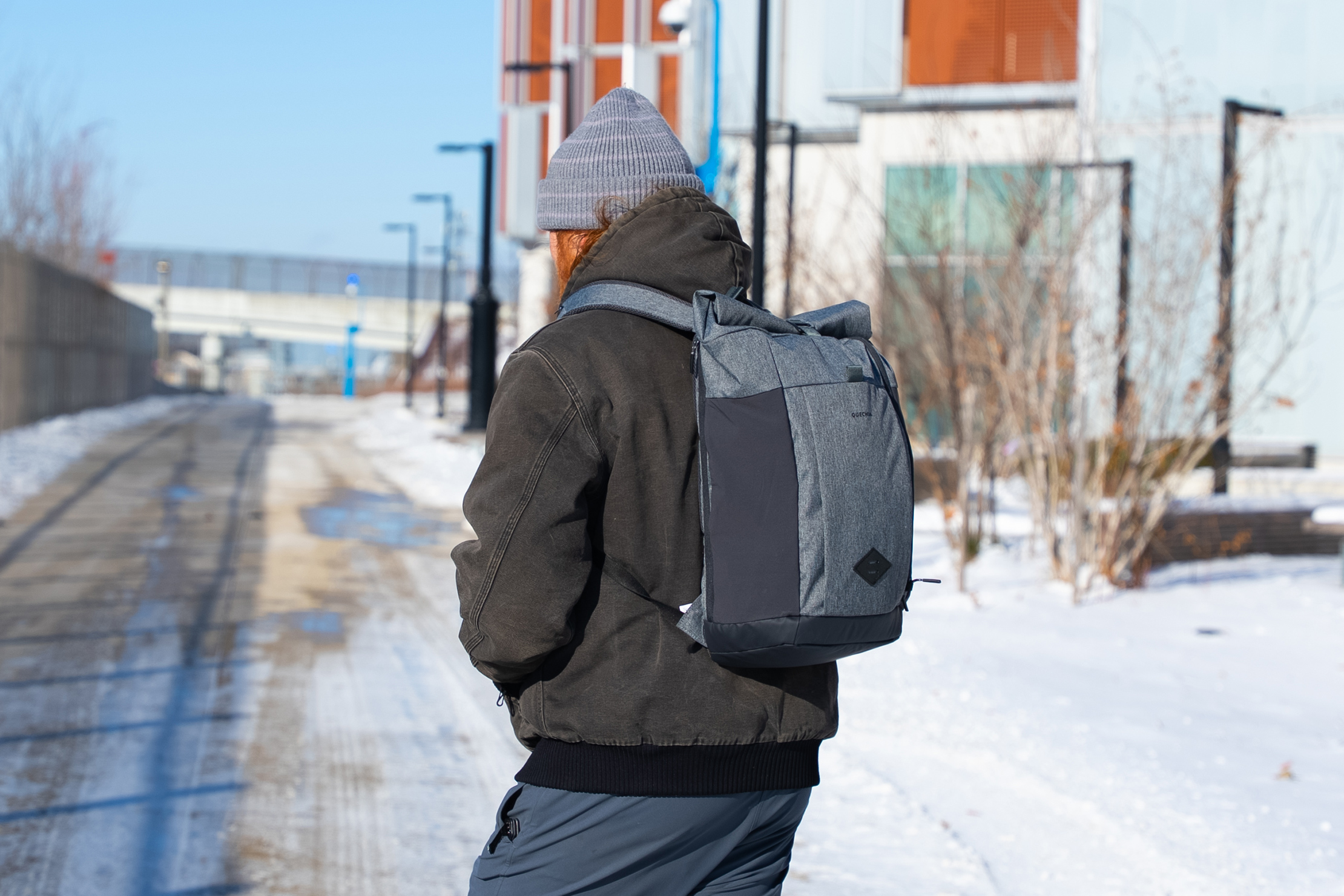
The backside has a luggage pass-through. It’s super simple, as it’s just a thin piece of material. The horizontal piece of material keeps your pack vertical when added to your rolling luggage, which we prefer. It’s on the lower part of the pack, which helps keep the center of gravity low, but the bag can jostle around if the going gets rough. We appreciate the inclusion, as it makes trips through the airport more comfortable.
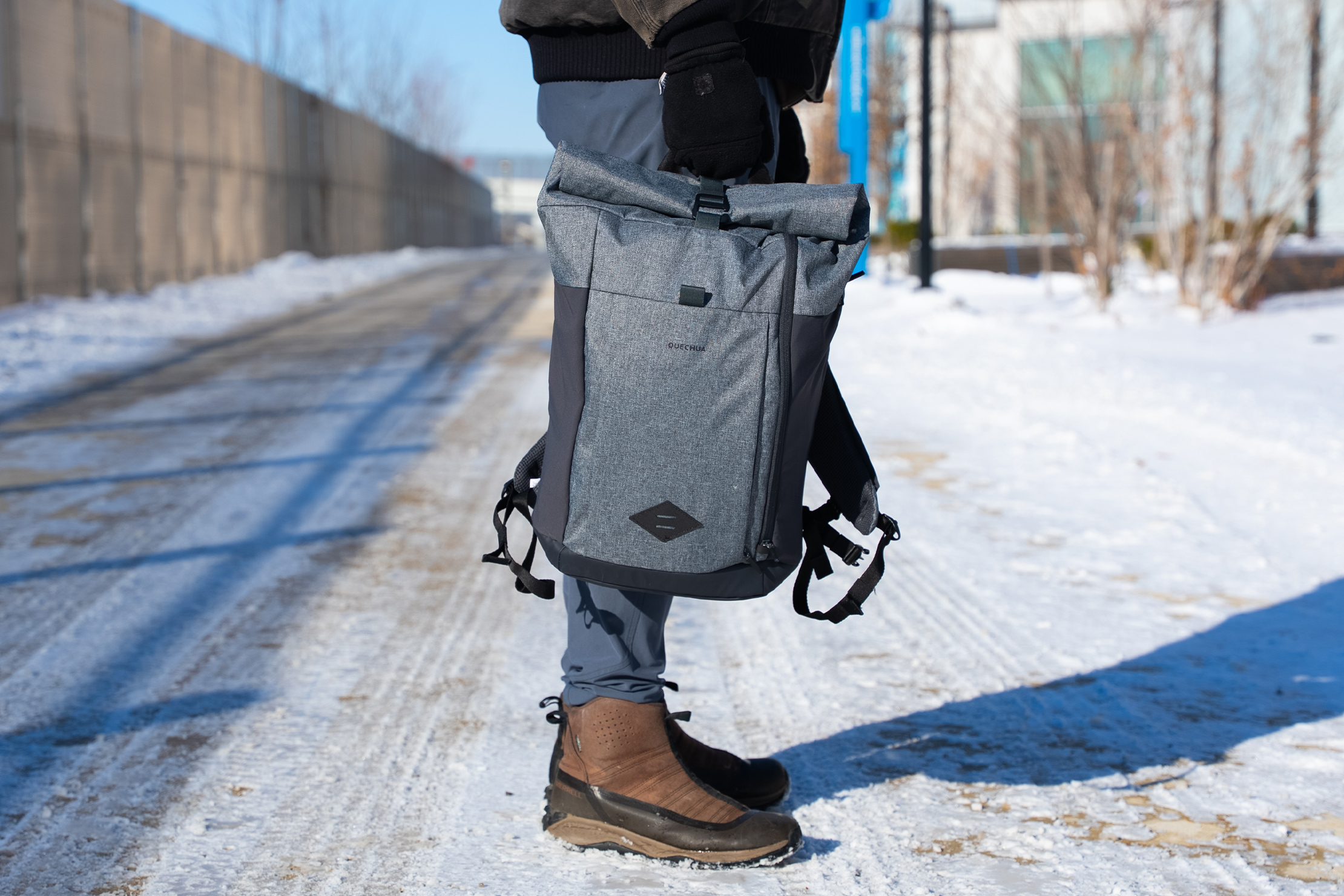
This is a rolltop bag. Decathlon’s literature says that, because of this, the pack expands from 23 to 27 liters. To accomplish this, just roll the top less after adding more gear. The buckle for the rolltop is metal, durable, and sleek. Likely, it’ll mark up over time, but we haven’t had that issue yet.
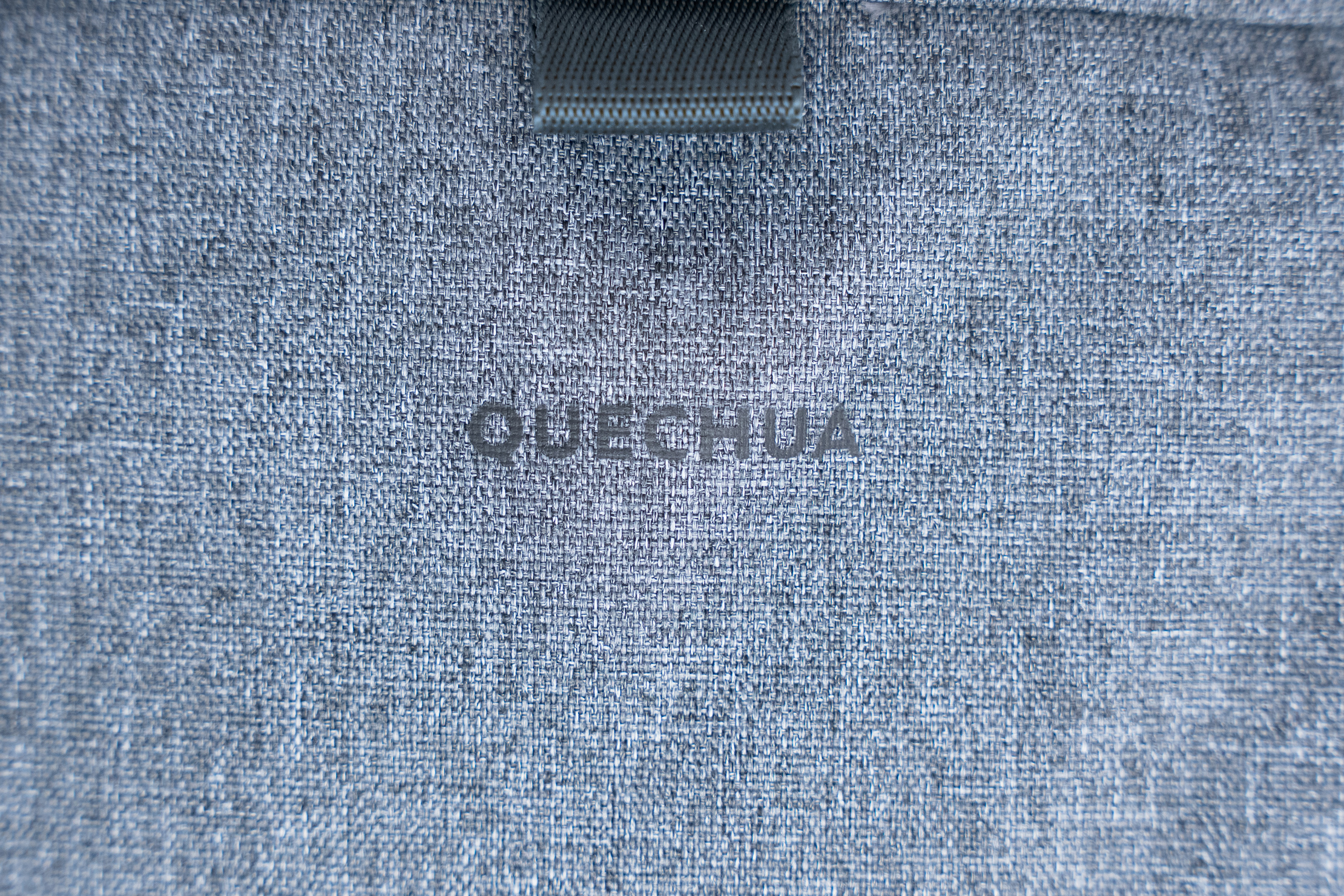
Going back to what we mentioned before, the bag looks a little cheap, but it isn’t expensive. We like the simplicity and that it doesn’t scream “tourist.” When you put on this pack, you could be a student, a commuter, or an adventurer. Who you’ll be when you put it on is up to you!
Fit Notes
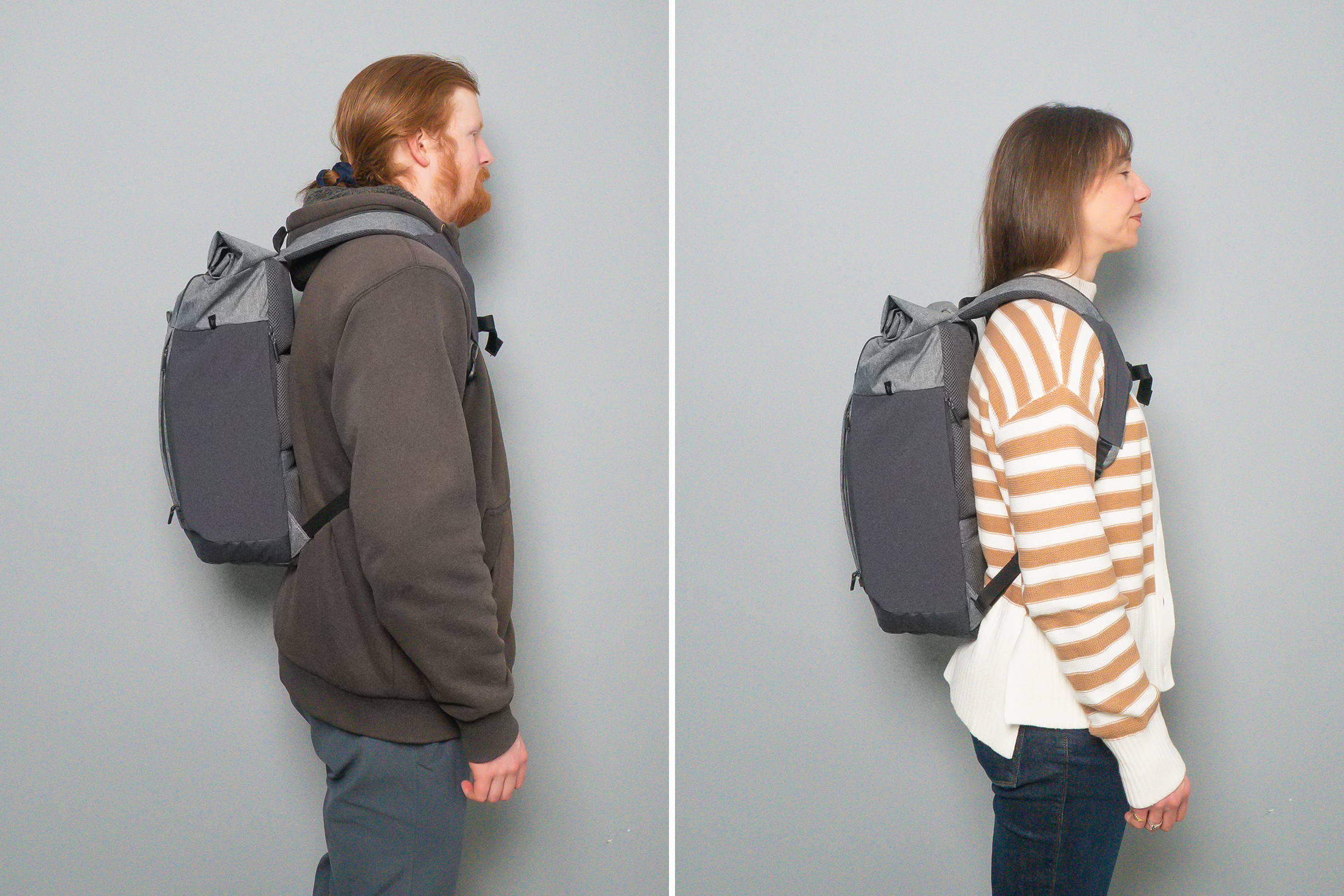
The back panel has a rigid plastic frame sheet, which is noticeable in places without padding. That said, there’s enough padding in most areas to keep you from feeling the hard plastic. Because of the frame sheet, the back panel has structure, along with two large vertical strips and one large horizontal strip of padding. The padding is big and chunky, but not dense. This isn’t our favorite design, but it’s comfortable enough. When you stow a laptop inside, it becomes even sturdier, which we like.
The shoulder straps have denser padding. This feels a bit more comfortable, especially if you wear the backpack for an extended period. The curve of the shoulder straps seems a bit more tailored to a masculine body type, but it’s comfortable enough for most users.
The sternum strap has some elastic, which keeps things together nicely without feeling too claustrophobic. It’s a simple design, but it works. The sternum strap is on a rail so that you can make micro adjustments, but it moves freely if you accidentally catch it on something.
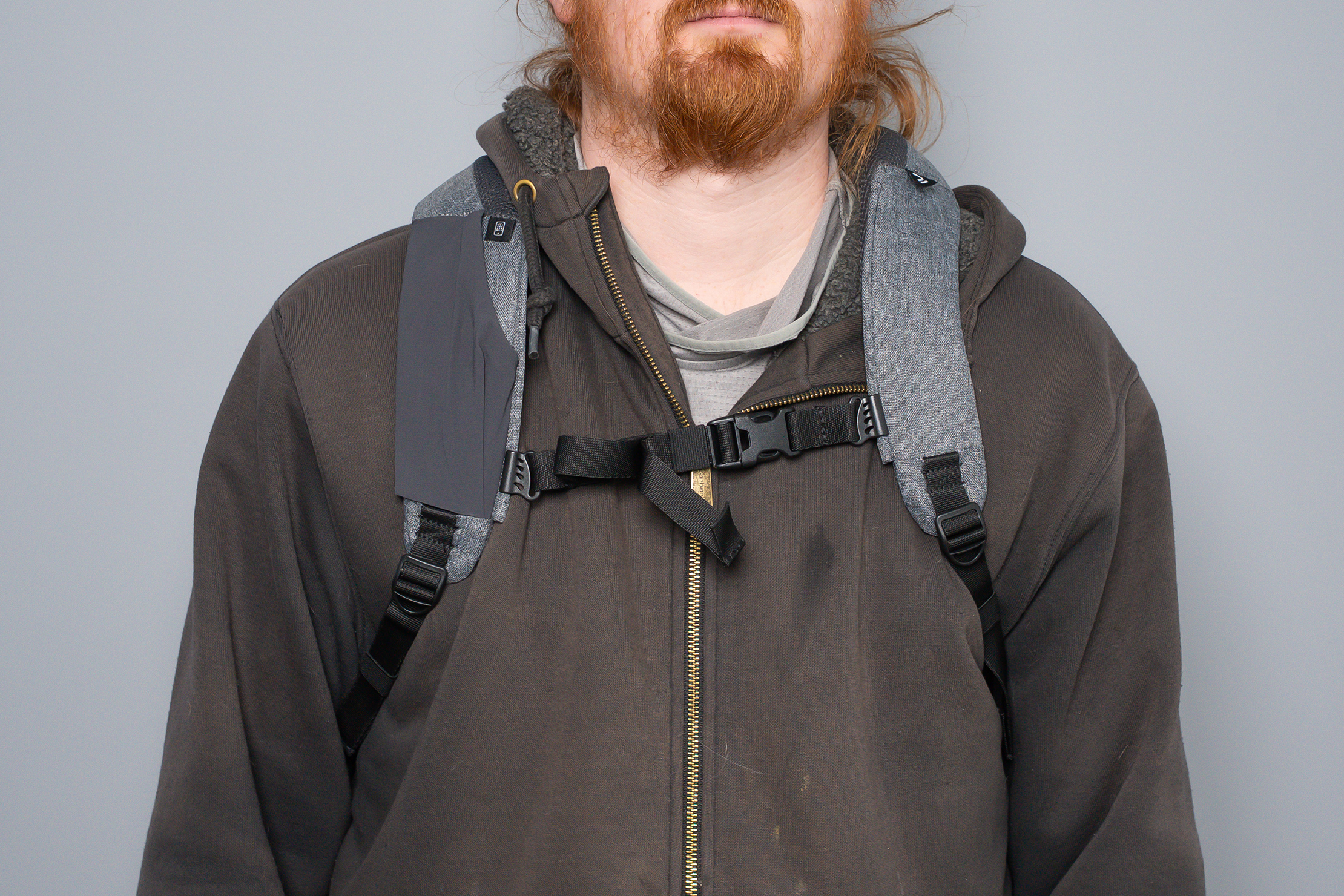
The right shoulder strap has an elastic pocket. It’s meant to stow a cell phone, and it will fit most models, but it takes up all the space (and then some). A granola bar is a better fit, so, unless you’re still using the Samsung Juke, you’ll probably want to stow your phone elsewhere.
The pack uses strap keepers to keep things organized. Because of these, there won’t be materials flopping in the wind, which we appreciate.
Inside The Pack
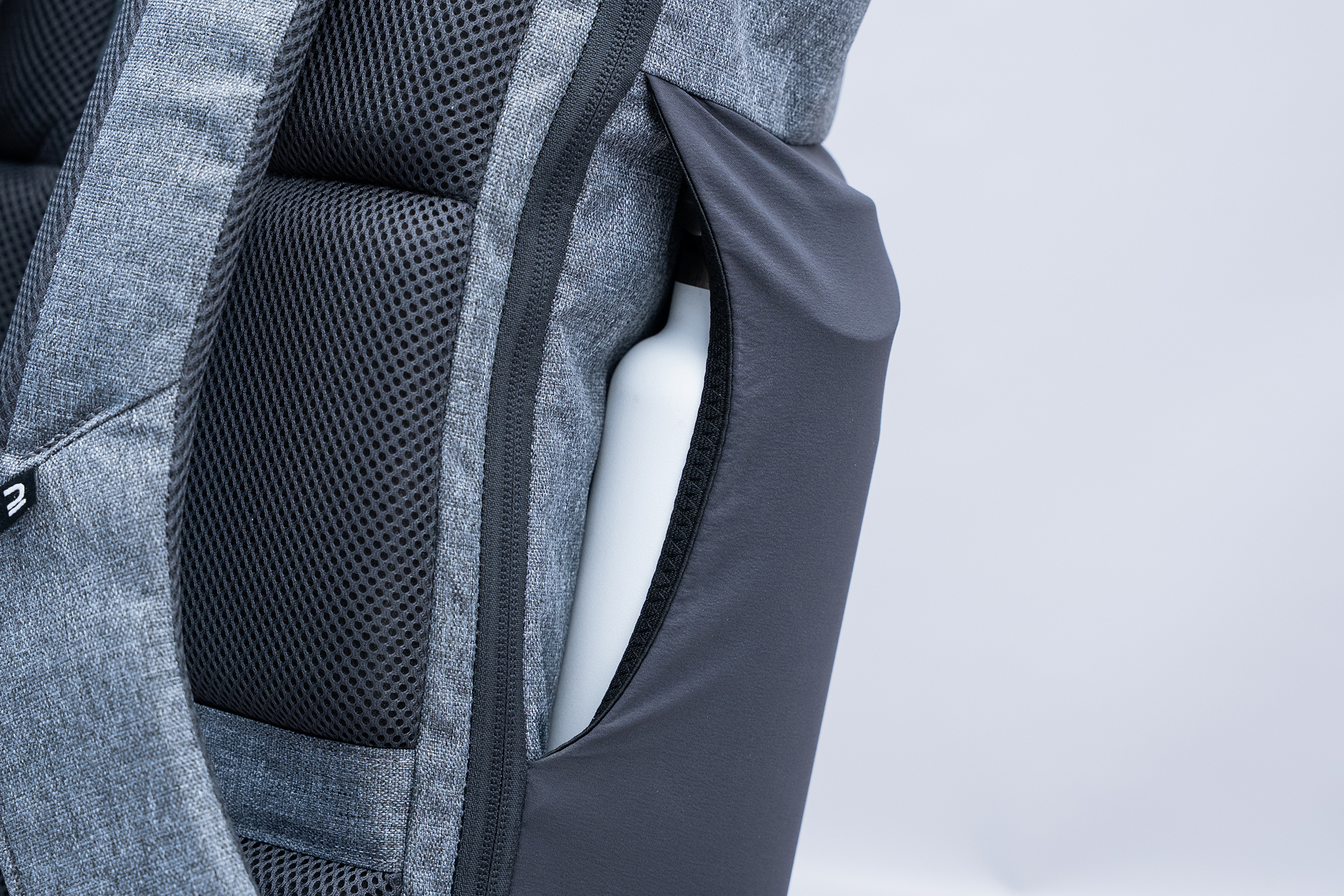
The pack has two stretchy side pockets that work for a travel water bottle or similar-sized items. They’re not traditional top-entry pockets—you access them from the back. This is fine for standard-sized bottles; however, wide bottles struggle a bit more. A 21-ounce Hydroflask fits perfectly, but a larger bottle, like a 32-ounce Nalgene, is a tighter fit. One of the side pockets has a cable pass-through directly above it, allowing a charging cable from the interior to feed into this pocket. It’s a neat concept, but it feels a bit dated. After all, why is my phone better off in the side pocket than inside the bag? It doesn’t get in the way of using the bag if you don’t want to use said feature.
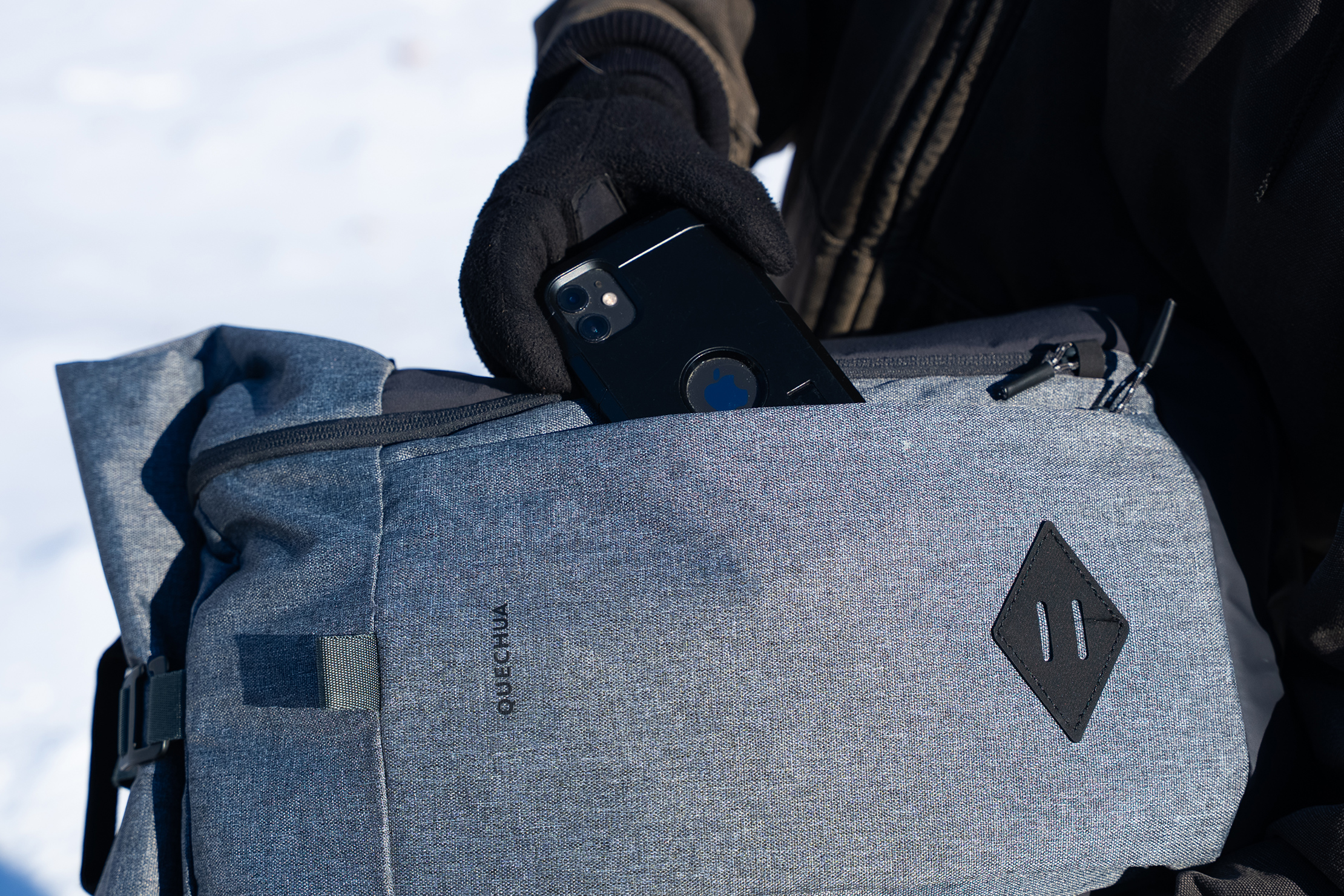
There’s a front pocket with a vertical zipper access point. There’s no organization here, so you can’t segment your gear. Still, there’s plenty of room for gear storage. You can fit a paperback book, a few accessories, or a small tablet or eReader. The pocket doesn’t have much padding, so ensure anything breakable is in a case or protected.
There’s a hidden pocket that you access from where the back panel meets the side of the pack. Typically, pockets like this utilize space behind the back panel, but this one is behind the water bottle pocket. You could stow your phone, wallet, or passport here, though it doesn’t feel as secure as a back panel pocket.
You can access the laptop compartment from the main compartment or from a side zipper. We prefer to access our laptop via the rolltop, but it’s nice to have the option to use it either way. The laptop area is well-padded and raised to keep your computer safe. As you’re accessing the entire main compartment, be careful that small gear doesn’t fall out when you insert or remove your laptop.
The main compartment is pretty easy to access thanks to a zipper that runs down one side from the top of the rolltop. You don’t have to use this zipper, but it makes organizing your gear and accessing items at the bottom of the pack easier.
Some of the interior organization is challenging to use. On top of the compartment, there’s a large zippered mesh pocket, two medium mesh pockets, and two pen slots below. The lower portion is challenging to access because of the angle you have to approach it to get inside, though the pockets don’t get in the way if you don’t choose to use them.
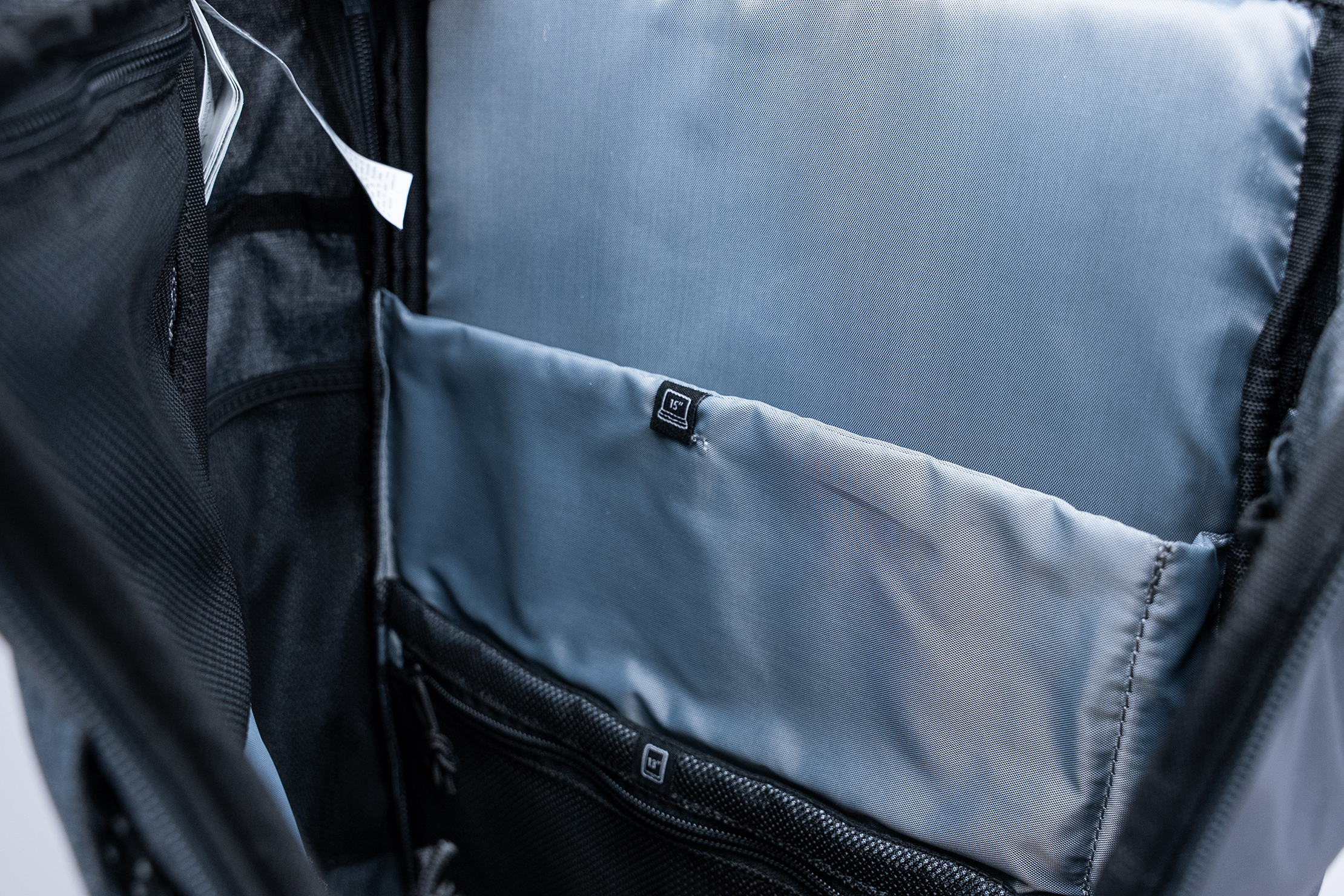
On the back side is the laptop slider we went over before, along with another smaller spot to stow a tablet. In testing, we stowed a travel keyboard here. There’s another large zippered pocket below that, which is handy for storing tech or your laptop charger.
The pack has two side mesh elastic pockets, too. There are pockets all over the interior of this pack, but they don’t all feel well thought out. It feels more like they tried to get as many pockets as possible on this thing and didn’t think about how you’d use them or what you might put inside them. Still, the materials that the pockets are made of are thin, so they don’t eat up much space.
Overall, we like using the Quechua NH500 Escape Rolltop 23L Backpack. It doesn’t have all the bells and whistles you’d expect from a top travel brand, but it costs a fraction of what big brands charge and offers a comfortable, durable, and organized way to get your gear from point A to point B. It’ll get you there, and sometimes, that’s all that matters.
Usage Timeline
Condition: Excellent
- The materials are thin and feel a little cheap—we’ll put them to the test
- There are a few loose threads
- We’re curious how comfortable it’ll be long-term
Condition: Excellent
- The materials feel a bit cheap, but they’ve held up fine
- No issues with any of the hardware
- The interior pockets crafted from mesh don’t feel very durable, but they’re working fine
Condition: Excellent
- The materials are still holding up fine
- There are a few loose threads, but nothing alarming
- No issues to report



Get your questions about the Quechua NH500 Escape Rolltop 23L Backpack answered from our team and the Pro Community right here on the page. Plus, join discussions with other members about gear, guides, and more.
Join Pack Hacker Pro or, Sign In